
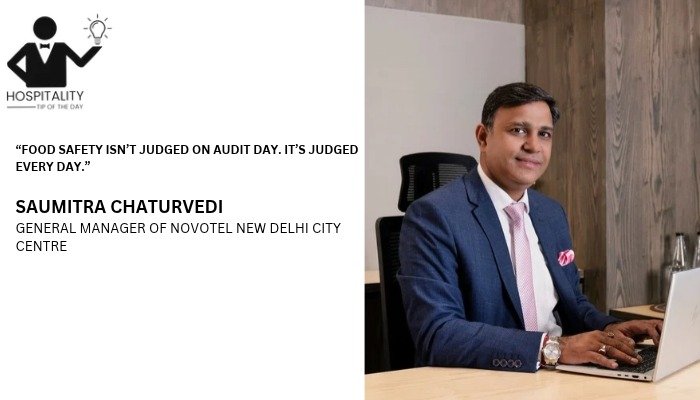
Hospitality Tip of the Day | Food Safety — The GM Perspective
Food Safety Culture Is Built Between Audits, Not During Them.
Saumitra Chaturvedi, General Manager of Novotel New Delhi City Centre, explains why leadership visibility, daily discipline, and guest-journey thinking define truly safe hospitality.
In a modern luxury hotel, food safety is no longer confined to the kitchen. It lives in bustling breakfast buffets, rooftop cocktail bars, grand banquets, late-night room service, minibars, and the personalized dining experiences expected by today’s premium travelers.
For Saumitra Chaturvedi, General Manager of Novotel New Delhi City Centre, the strongest food-safety system isn’t the one with the highest audit score—it’s the one where teams consistently do the right thing when no one is watching.
For this edition of Food Safety — The GM Perspective, Hospitality Tip of the Day spoke with Saumitra Chaturvedi about leadership, operational discipline, VIP dining, and the daily habits that keep guests safe.
1. The Best Warning Signs Appear Before the Report Does
Saumitra Chaturvedi believes incidents are rarely sudden—they’re usually preceded by small operational signals.
Rather than waiting for compliance reports, he monitors real-time temperature logging across Food Exchange, Gourmet Bar, The Flying Trunk, banquet kitchens, and how confidently team members report near misses. Staff fatigue during high-occupancy periods is another leadership indicator he watches closely.
Most importantly, he makes unannounced walks through restaurants and banquet staging areas throughout service.
“A team that reports small issues early is a team that is paying attention.”
Leadership presence, he says, creates accountability long before inspections do.
2. An Audit Is a Snapshot. Daily Habits Are the Real Picture.
Novotel New Delhi City Centre follows HACCP, ALLSAFE, and FSSAI standards, but Chaturvedi believes certifications alone cannot define operational excellence.
The hotel’s Manager on Duty (MOD) completes a dedicated food-safety checklist every day, reinforcing standards across every outlet rather than treating audits as occasional milestones.
“Strong audit results give us confidence, but our daily rhythm tells us whether the culture is truly living up to the paperwork.”
For him, consistency matters more than celebration.
3. Food Safety Should Follow the Guest Everywhere
One of the biggest misconceptions in hospitality, according to Chaturvedi, is viewing food safety as a kitchen responsibility.
Instead, he describes it as a guest-journey discipline.
Across the hotel:
Food Exchange focuses on buffet replenishment and live-counter discipline.
Gourmet Bar and The Flying Trunk emphasize careful ingredient handling for cocktails and small plates.
Banquets rely on structured pre-event briefings and clearly assigned accountability for every station.
Room service and minibars maintain strict cold-chain integrity and holding-time discipline.
Whether food is served in a ballroom, a rooftop restaurant, or a guest suite, the protocol remains identical.
“Food safety isn’t a department—it’s a promise that follows the guest everywhere in the hotel.”
4. Personalization Begins Before the Guest Orders
Luxury personalization becomes safer when preparation begins early.
Using Accor Limitless membership insights and the hotel’s digital guest profile, teams identify allergies, dietary preferences, and cuisine choices before arrival. Operations managers personally welcome members and reconfirm dietary requirements, allowing chefs to prepare bespoke menus with dedicated oversight.
The guest experiences effortless hospitality, while the operational complexity stays behind the scenes.
“The guest should only ever see the thoughtfulness on the plate, never the careful process behind it.”
5. The 10-Minute Food Safety Test
If given only ten minutes, Saumitra Chaturvedi wouldn’t begin with documents—he would begin with people.
He watches how calmly teams operate during live service, then immediately checks:
Handwashing practices
Gloves and headgear compliance
Colour-coded chopping boards
Chiller temperatures
Storage organization and labelling
These operational fundamentals, he says, reveal the true health of a hotel’s food-safety culture far better than paperwork alone.
“Ten minutes is enough to read the room—if you know where to look.”
About the Leader
Saumitra Chaturvedi is the General Manager of Novotel New Delhi City Centre, leading one of Delhi NCR’s contemporary upscale hospitality destinations with multiple dining venues, extensive banquet facilities, and guest-centric luxury experiences.
This article is part of Hospitality Tip of the Day’s editorial series, Food Safety — The GM Perspective, featuring real conversations with General Managers shaping the future of safe luxury hospitality.