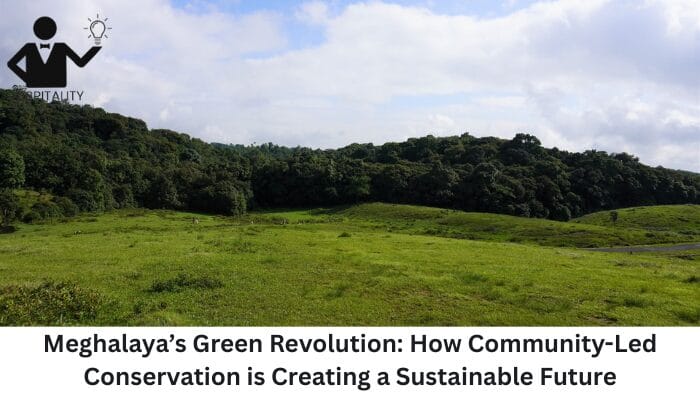
Often referred to as the “Abode of Clouds,” Meghalaya is one of India’s most naturally gifted destinations. With its lush forests, sparkling rivers, rolling hills, and the distinction of being home to Asia’s cleanest village, the state has long been celebrated for its breathtaking landscapes and rich ecological heritage.
As Meghalaya continues to advance through infrastructure development and economic growth, the state government remains firmly committed to ensuring that progress does not come at the cost of nature. By balancing development with environmental responsibility, Meghalaya is emerging as a national leader in sustainable growth, climate resilience, and community-driven conservation.
A Vision for Sustainable Development
Under the leadership of Chief Minister Shri Conrad K. Sangma, Meghalaya has embraced a development model that places environmental protection at its core. Recognizing that local communities have traditionally served as custodians of the region’s natural resources, the government has introduced several innovative initiatives aimed at empowering citizens while safeguarding forests and biodiversity.
One of the most significant milestones in this journey was the launch of the GREEN Meghalaya Scheme (Grassroots Level Response towards Ecosystem Enhancement and Nurturing) in June 2022. Based on the globally recognized Payment for Ecosystem Services (PES) model, the initiative rewards communities and individuals who actively conserve forests and natural ecosystems.
Building on its success, the government introduced GREEN Meghalaya+, an expanded version of the program that aims to conserve an additional 50,000 hectares of forest land. The scheme supports villages, clans, communities, and individuals willing to protect natural forests for a minimum period of 30 years.
India’s Largest Payment for Ecosystem Services Initiative
The GREEN Meghalaya initiative has become a landmark environmental program and is the first of its kind implemented at such a scale in India. Through financial incentives, the scheme encourages local stakeholders to take ownership of conservation efforts while creating sustainable livelihood opportunities.
In March, the government distributed more than ₹25 crore in financial assistance to over 2,700 beneficiaries under GREEN Meghalaya+ during an event in Shillong. In a separate program held in Tura, another ₹1.16 crore was released to support 60 beneficiaries committed to forest conservation.
These incentives have played a crucial role in motivating communities to preserve natural resources while strengthening local economies.
Communities Leading the Conservation Movement
The success of Meghalaya’s environmental initiatives lies in the active participation of its people.
In Daronggre, Garo Hills, beneficiaries have taken responsibility for protecting clan forests, preserving biodiversity, and safeguarding cultural heritage. Their commitment has been rewarded through enhanced incentives of up to ₹20,000 under the GREEN Meghalaya+ scheme.
Similarly, the Pyrtuh clan in Mustem village, Jaintia Hills, has successfully conserved 15 hectares of forest land while benefiting from the Payment for Ecosystem Services model. These examples demonstrate how traditional community stewardship can effectively contribute to long-term environmental sustainability.
Expanding Forest Cover Across the State
Meghalaya has made remarkable progress in restoring and expanding its forest resources. Over the last eight years, more than 30,000 hectares of new forests have been planted across the state.
Alongside afforestation efforts, large-scale programs focused on catchment protection and water resource conservation are helping strengthen ecological resilience and improve environmental security for future generations.
National Recognition for Climate Adaptation Efforts
Meghalaya’s innovative approach to climate adaptation has earned national recognition. Several community-based environmental initiatives were highlighted in the Economic Survey 2025-26, presented in Parliament by Union Finance Minister Smt. Nirmala Sitharaman.
The survey praised projects such as the Protection of Vulnerable Catchment Areas under MegARISE, the Spring Mapping Initiative, and the Climate-Adaptive Community-Based Water Harvesting Project, recognizing Meghalaya’s efforts to balance ecological preservation with economic development.
Protecting Water Sources Through MegARISE
Water security remains a top priority for the state government. Through the MegARISE project, Meghalaya is working to enhance water availability by protecting critical catchment areas in the Umiew region of East Khasi Hills and the Ganol region of West Garo Hills.
The project promotes sustainable forest management practices that strengthen watershed ecosystems and ensure long-term water sustainability for local communities.
Reviving Springs and Strengthening Water Security
Over the past five years, Meghalaya has undertaken one of the most ambitious spring conservation initiatives in the country. Approximately 60,000 springs have been mapped, helping authorities better understand and manage the state’s water resources.
The government has also constructed more than 700 water harvesting structures and successfully protected 747 critical water sources, significantly improving water availability across various regions.
These efforts are particularly important in addressing the challenges posed by climate change and seasonal water scarcity.
Community-Based Water Harvesting for Sustainable Livelihoods
Another transformative initiative involves the construction of over 530 Community-Based Water Harvesting Projects throughout the state.
Beyond water conservation, these projects support livelihood enhancement programs that empower local communities through active participation, creating sustainable economic opportunities while strengthening climate resilience.
MegLIFE: Restoring Degraded Forests
The government has also launched the ambitious MegLIFE Project, which aims to restore 22,500 hectares of degraded forest land across 30 blocks in 12 districts.
The project focuses on ecological restoration, biodiversity conservation, and improving environmental health, further strengthening Meghalaya’s position as a leader in sustainable natural resource management.
Greening Urban Development in New Shillong Township
As Meghalaya expands its urban infrastructure, environmental sustainability remains a key consideration. The development of the New Shillong Township reflects the government’s commitment to creating greener urban spaces.
To complement urban growth, the state launched the Avenue Plantation Project in 2025. The initiative aims to plant approximately 6,000 trees along major roads and medians, covering more than 25 kilometers of avenues and 2 kilometers of median plantations.
This effort ensures that urban expansion continues in harmony with environmental conservation.
A Model for Sustainable Growth
Meghalaya’s environmental journey demonstrates how economic development and ecological conservation can work together to create a more sustainable future. Through innovative policies, community participation, forest restoration programs, water conservation initiatives, and green urban planning, the state is setting an inspiring example for the rest of the country.
As the government continues to invest in climate resilience and environmental stewardship, Meghalaya is not only protecting its natural treasures but also creating new opportunities for communities to benefit from a growing green economy.
The state’s commitment to preserving its forests, water resources, and biodiversity ensures that future generations will continue to experience the unmatched beauty and ecological richness of the Abode of Clouds.