
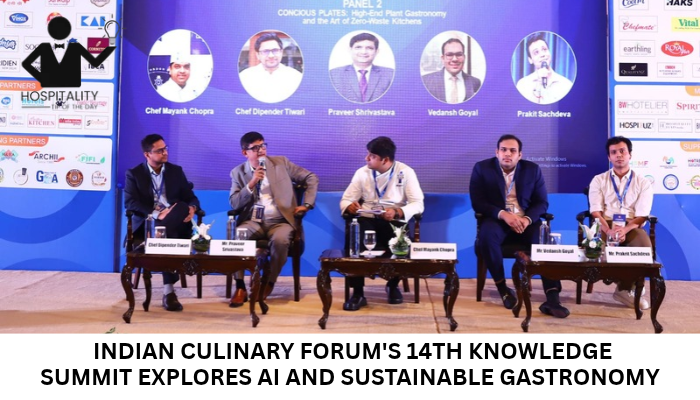
The Indian Culinary Forum (ICF) successfully hosted its 14th Knowledge Summit at Le Méridien, New Delhi, bringing together leading chefs, hospitality professionals, culinary educators and industry experts to discuss the future of gastronomy. Held on 2 November 2026, the summit focused on how artificial intelligence, sustainable food practices and human creativity can work together to transform the culinary and hospitality industries.
Centred around the theme “AI Bridging Sustainable Pastures & Culinary Passion”, the event explored the growing influence of technology in professional kitchens, responsible food sourcing, waste reduction, food safety and the importance of preparing the next generation of culinary professionals for an evolving industry.
Industry Leaders Discuss the Future of Culinary Innovation
The summit opened with a welcome address by Chef Bharat Alagh, Vice President of the Indian Culinary Forum, followed by a keynote address from Meena Bhatia, Vice President and General Manager of Le Méridien, New Delhi.
The opening sessions highlighted the importance of collaboration between technology, sustainability and traditional culinary expertise. Discussions also emphasised how hospitality businesses and professional chefs can adapt to changing industry expectations while preserving the creativity and cultural heritage associated with food.
The programme featured three panel discussions covering digital innovation in kitchens, sustainable gastronomy and responsible culinary education. Dr. Chef Prem Ram, Joint Secretary of the Indian Culinary Forum, served as the Convener and Coordinator of the Knowledge Summit.
The Digital Kitchen: Balancing AI and Culinary Creativity
The first panel discussion, titled “The Digital Kitchen: Balancing AI Automation with Human Passion and Culinary Heritage”, examined how artificial intelligence and automation are changing professional kitchen operations.
Moderated by Rupreet Jassi, Executive Director of the International Institute of Culinary Arts, New Delhi, the session explored how digital technologies can improve inventory management, kitchen efficiency and menu planning while allowing chefs to maintain their creative freedom and culinary traditions.
The panel featured Ankit Sharma, Global Food Innovation & R&D Director and Chief Culinary Officer at Compass Group; Sunil Khanna, Principal Consultant at Food Service Design India; Chef Anuj Mathur, Executive Chef at Taj Surajkund Resort & Spa, Delhi NCR; and Manan Garg, Vice President of Roop Mahal Rice.
The discussion highlighted how AI-powered solutions can support professional kitchens by improving operational planning and resource management. However, the participants also emphasised that technology should complement chefs’ knowledge, experience and creative decision-making rather than replace them.
Speaking about the importance of industry collaboration, Chef Bharat Alagh said that platforms such as the Knowledge Summit provide valuable opportunities for culinary professionals, educators and industry leaders to exchange ideas.
He also highlighted the need for chefs to embrace innovation while preserving the traditional skills and creativity that define the profession.
Conscious Plates: Promoting Plant-Based Gastronomy and Zero-Waste Kitchens
The second panel, “Conscious Plates: High-End Plant Gastronomy and the Art of Zero-Waste Kitchens”, focused on sustainable dining, plant-forward cuisine and environmentally responsible food practices.
Moderated by Chef Mayank Chopra, Associate Director – Culinary Studies at Le Cordon Bleu, the discussion explored how restaurants and hospitality businesses can incorporate sustainable sourcing, regional ingredients and plant-based food initiatives into their culinary offerings.
The panellists included Chef Dipender Tiwari, Director – Culinary & Dining at Qutab Entertainment Pvt. Ltd.; Praveer Shrivastava, Executive Director of the Plant Based Foods Industry Association (PBFIA); Vedansh Goyal, Founder of 1.5 Degree; and Prakrit Sachdeva, Programme and Ecosystem Manager at Kickstarting for Good.
The session highlighted the growing importance of reducing food waste, exploring underutilised regional ingredients and adopting innovative food production methods such as hydroponics.
The discussion also reflected how sustainability can become an integral part of modern restaurant operations without compromising food quality, creativity or the overall dining experience.
Responsible Gastronomy: Preparing the Next Generation of Chefs
The third panel discussion, titled “Responsible Gastronomy: Empowering the Future Chef through Food Safety, Education, Innovation & Opportunity”, explored the importance of culinary education, food safety and professional development.
Moderated by Jayant Kumar Chauhan, Country Manager – India, Nepal & Bhutan at the Confederation of Tourism & Hospitality (CTH), UK, the session focused on preparing future-ready chefs for the changing requirements of the hospitality industry.
The panel brought together Arjun Datta, Chief Operating Officer of the International Institute of Culinary Arts, New Delhi; Sohani Sachdeva, Director of Marketing at HAKS – Hospitality and Kitchen Solutions; Suneel Shah, National Sales Manager – Commercial Water Solutions at Pentair (Indian Subcontinent); Chef Shivneet Pohoja, Corporate Chef at Nestlé Professional India; and Dr. Pawan Kumar Singh, Deputy Director/CLA at FSSAI-NRO.
Discussions highlighted the importance of maintaining food safety standards, strengthening culinary education and creating better professional opportunities for emerging talent.
The participants also emphasised the need for stronger collaboration between educational institutions, hospitality businesses and industry organisations to develop skilled culinary professionals.
Industry Leaders Highlight the Importance of Collaboration
Chef Vivek Saggar, General Secretary of the Indian Culinary Forum, highlighted the importance of preparing culinary professionals to respond to changing industry expectations.
He noted that the future of the profession depends on effectively combining technological adoption, food safety, waste reduction and professional education.
According to him, the Knowledge Summit provides a platform to discuss these priorities and explore practical ways to translate industry conversations into meaningful improvements across the hospitality sector.
The concluding remarks were delivered by Dr. Chef Prem Ram, who reiterated the importance of balancing technological progress with responsible culinary practices.
He explained that artificial intelligence can help improve kitchen efficiency, while sustainable sourcing, waste reduction and stronger food safety practices can contribute to a more responsible food ecosystem.
However, he stressed that technology must complement rather than replace the creativity, judgement and passion of professional chefs.
AI and Sustainability: Shaping the Future of Gastronomy
The 14th Knowledge Summit highlighted how the culinary industry is entering a period of significant transformation, with artificial intelligence, sustainability and changing consumer expectations influencing how food is prepared, sourced and experienced.
From AI-enabled kitchen operations and plant-forward menus to responsible food sourcing and improved professional education, the discussions explored several opportunities for the hospitality industry to become more innovative and environmentally conscious.
The event also reinforced the importance of preserving culinary heritage and human creativity while adopting new technologies.
By bringing together professionals from different areas of the hospitality and food industries, the Indian Culinary Forum created an important platform for knowledge sharing, collaboration and discussions on the future of gastronomy.
About the Indian Culinary Forum (ICF)
Established in 1987 in New Delhi, the Indian Culinary Forum (ICF) is a non-profit organisation dedicated to promoting and advancing India’s culinary arts. It serves as a platform for professional chefs, supporting the growth of the country’s culinary community through education, competitions, seminars and industry initiatives.
The organisation is affiliated with the World Association of Cooks Societies (WACS), which represents more than nine million professional chefs across 110 countries.
Through its various initiatives, ICF works to promote Indian cuisine internationally, encourage young people to pursue careers in hospitality and preserve the country’s rich culinary traditions.
The forum also supports emerging culinary talent through professional training, mentorship and continuous learning opportunities.
With its 14th Knowledge Summit, the Indian Culinary Forum continued its efforts to bring the hospitality industry together, encouraging a future where technological innovation, environmental responsibility and human creativity remain at the heart of gastronomy.