
The Indian culinary industry is evolving rapidly, with changing dining preferences, technological innovation and growing international recognition creating new opportunities for chefs. At the same time, questions around professional development, workplace culture, sustainability and culinary education are shaping conversations about the industry’s future.
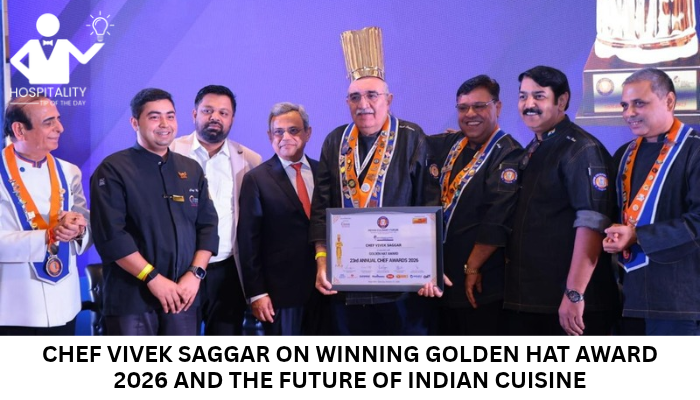
Chef Vivek Saggar, recipient of the prestigious Golden Hat Award at the 23rd Annual Chef Awards 2026, has spent decades contributing to India’s hospitality and culinary landscape. From his early training at IHM Ahmedabad to international judging assignments and mentoring young culinary professionals, his journey reflects a deep commitment to excellence and industry development.
In this exclusive interview, Chef Vivek Saggar shares his experiences, discusses the changing responsibilities of modern chefs and explains how India can strengthen its position on the global culinary stage. He also explores the role of artificial intelligence, sustainable kitchen practices, culinary education and the opportunities awaiting the next generation of Indian chefs.
From Culinary Beginnings to the Golden Hat Award
Q. You received the Golden Hat Award at the 23rd Annual Chef Awards. What experiences or milestones have most influenced your journey?
My journey began at IHM Ahmedabad and with Food Art in 1989, where I learned that there are no shortcuts to excellence.
Serving as a WorldChefs Certified Continental Judge since 2012, along with professional assignments in Malaysia, Taiwan, Italy and Singapore, broadened my understanding of international culinary standards.
However, one of the most meaningful shifts in my career has been moving beyond personal achievements to creating opportunities for others. Through the Indian Culinary Forum and initiatives such as Culinary Art India, Young Chefs Challenge and the Annual Chef Awards, I have worked towards supporting and developing culinary talent.
My involvement with IndiaSkills and WorldSkills through the Tourism and Hospitality Skill Council has also been an important part of this journey.
What keeps me motivated is seeing people grow. The Golden Hat Award recognises my past contributions, but I see it as a responsibility to continue mentoring and giving back to the culinary fraternity.
The Changing Role of Chefs in Modern Hospitality
Q. How has the chef’s role changed, and what does it take to succeed in today’s culinary industry?
Chefs have evolved from kitchen-focused professionals into influential voices in business, education, innovation and food culture.
Today, they are expected to understand food costs, menu engineering, procurement, brand positioning and multicultural team management. Creative freedom has expanded, but it must also be commercially viable and consistent.
Success in today’s culinary profession rests on five important foundations: strong technical skills, continuous learning, commercial awareness, leadership abilities and respect for ingredients and people.
Above all, chefs must remain humble.
The chef of tomorrow must combine the heart of an artist, the discipline of a craftsman, the mindset of an entrepreneur and the responsibility of a leader.
Indian Cuisine on the Global Culinary Stage
Q. Has the growing global popularity of Indian cuisine translated into enough opportunities for Indian chefs? What challenges remain?
Not proportionately. The world increasingly appreciates Indian food, but Indian chefs are not yet recognised to the same extent as global culinary leaders.
We need to move beyond Indian restaurants and create stronger representation in international hotel groups, culinary education, research, consulting and entrepreneurship.
There are five important steps that can help achieve this:
-
International exposure: Encourage chef exchanges, overseas internships and international masterclasses.
-
Professional benchmarking: Promote certifications, WorldSkills participation and international culinary competitions.
-
Documenting culinary heritage: Create structured repositories of regional recipes, ingredients and traditional cooking techniques.
-
Industry collaboration: Strengthen partnerships between chef associations, hospitality companies, government bodies and educational institutions.
-
Mentorship and representation: Encourage experienced chefs to mentor emerging talent and participate in international panels and forums.
Indian cuisine has enormous potential, and developing globally recognised culinary professionals is essential to taking that potential further.
Changing Dining Habits and Guest Expectations
Q. How are changing dining habits and consumer expectations influencing professional kitchens?
Today’s guests are better informed and increasingly seek authenticity, regional cuisines, healthier food, plant-based options, sustainability and memorable dining experiences.
Professional kitchens must respond to these expectations while maintaining consistency, quality and commercial viability.
Chefs need to balance innovation with authenticity. Local sourcing, zero-waste cooking and energy efficiency should become everyday operational practices rather than simply marketing concepts.
The future of professional cooking lies in combining authenticity, standardisation, innovation, speed of service and sustainability.
Trends will continue to change, but quality, flavour, consistency and genuine hospitality will always remain important.
Building a More Sustainable Career for Chefs
Q. What needs to change to make a culinary career more sustainable and rewarding?
The hospitality industry must stop treating long working hours and constant pressure as unavoidable parts of kitchen culture.
Employers need to introduce better workplace practices, including:
-
Structured working hours, advance duty rosters, weekly days off and monitored, paid overtime.
-
Adequate staffing based on business volumes.
-
Fair compensation and transparent promotion opportunities.
-
Better working conditions, including proper ventilation, safe equipment, nutritious staff meals and rest areas.
-
Structured training programmes and mentorship.
-
Respectful workplaces with zero tolerance for bullying and confidential grievance channels.
-
Employee well-being initiatives, including healthcare and mental health support.
Management should monitor employee retention, absenteeism, overtime and staff satisfaction with the same seriousness as food costs and guest satisfaction.
A culinary career must offer dignity, financial stability, work-life balance and opportunities for long-term growth.
Artificial Intelligence and the Future of Professional Kitchens
Q. Which aspects of a chef’s work will change most with AI and automation, and which skills will remain uniquely human?
I see technology as an opportunity rather than a threat.
The biggest changes will happen in kitchen operations. Artificial intelligence can support inventory management, purchasing, menu engineering, digital recipe management, allergen control and nutritional analysis.
Smart equipment will increasingly monitor cooking temperatures and timing, while automation can assist with cutting, portioning and dishwashing.
However, creativity, intuition, flavour judgement, cultural sensitivity and the ability to create memorable experiences will remain uniquely human qualities.
A machine can reproduce a recipe, but it cannot truly recreate the emotion and story behind a regional dish.
Our priorities should be to embrace technology, introduce digital literacy and data skills into culinary training, and preserve the human touch.
The chef of tomorrow will not compete with technology but will learn to use it intelligently.
Bridging the Gap in India’s Culinary Education
Q. What are the biggest gaps in India’s culinary education, and how can industry and institutions work together to address them?
The biggest gap is between classroom learning and the realities of professional kitchens.
Students need more exposure to live service pressure, time management, food costing, consistency and team leadership.
To bridge this gap, I believe the industry and educational institutions should focus on:
-
Industry-led curriculum: Regularly update culinary courses with inputs from executive chefs and hospitality companies.
-
Structured internships: Introduce outcome-based internships with designated industry mentors.
-
Faculty development: Provide culinary educators with opportunities for industry attachments.
-
Competency-based assessments: Align training and evaluations with IndiaSkills and WorldSkills benchmarks.
-
Modern culinary education: Include food costing, menu engineering, sustainability, digital kitchen management and AI awareness.
-
Fair compensation: Improve pay and career opportunities for culinary professionals, including those entering the industry at grassroots levels.
A stronger connection between education and industry will help prepare students for the actual demands of professional kitchens.
The Future of India’s Culinary Industry
Q. What will define the next phase of India’s culinary industry, and how should chefs prepare for it?
Regional Indian menus, millets, plant-forward dining, farm-to-table concepts, experiential dining, cloud kitchens and chef-led entrepreneurship are already shaping the industry’s future.
Technology is also playing an increasingly important role in forecasting, inventory management and kitchen operations.
Chefs should prepare for this transformation in five ways:
-
Rediscover India’s culinary heritage: Explore lesser-known cuisines from the Northeast, Himalayan regions and coastal communities.
-
Embrace technology: Understand AI-powered inventory systems, digital recipes and smart kitchen equipment.
-
Make sustainability operational: Focus on seasonal sourcing, root-to-stem cooking and food waste tracking.
-
Develop business and leadership skills: Prepare to lead hospitality businesses, not just professional kitchens.
-
Meet international standards: Participate in culinary competitions, WorldSkills programmes, international exchanges and professional networks.
My vision is for Indian chefs to become global culinary leaders who influence trends, innovation and education.
The next decade belongs to chefs who respect their roots, embrace technology, understand business and remain committed to excellence.
A Vision Beyond the Kitchen
Chef Vivek Saggar’s journey highlights how the role of a culinary professional extends far beyond preparing exceptional food. Mentorship, education, international exposure, sustainable practices and industry collaboration are becoming equally important in shaping the future of hospitality.
His Golden Hat Award at the 23rd Annual Chef Awards 2026 represents recognition of his professional journey and continued contribution to the culinary fraternity.
As India’s food culture gains international attention, the next challenge will be to develop chefs who can preserve the country’s culinary heritage while competing, innovating and leading on the global stage.
For the next generation of culinary professionals, his message is clear: respect your roots, keep learning, embrace change and never compromise on excellence.